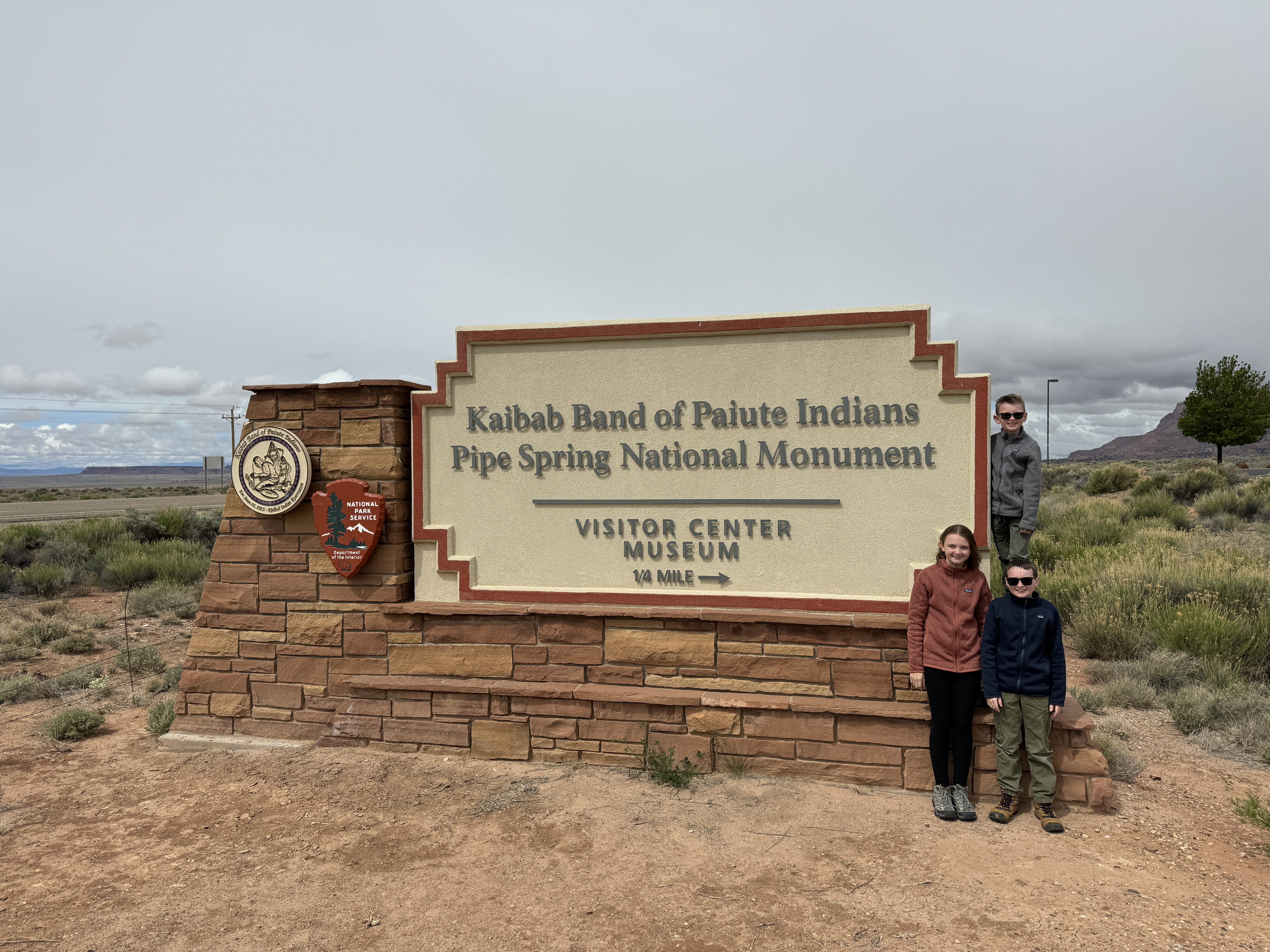
Today we visited the NPS that was down the road from our campsite. Pipe Spring might not attract the same 4.65 million visitors/year like Zion, but it does have important things to learn about native culture and Western pioneer history. And what better time than during a history lesson to explain polygamy to your kids. 🤷🏻♀️
The museum is jointly operated by the NPS and the Kaibab Band of Paiute Indians.There are exhibits about the people and the cultures who have lived in the Arizona/Utah borderlands for centuries. This cradleboard was Elleny’s favorite item. ❤️Adler liked the Kumoo’ koowup which were throwing sticks used to knock out rabbits or other small game. 😳Kaibab Paiutes lived here and used the water until Mormon pioneers from Utah displaced them in the 1850s.We got to meet Tess and Whit, the longhorn steers, who live at Pipe Spring. In the 1860s, Mormon settlers used the water source for the thousands of cattle that they brought with them to graze the grasslands. A reliable water source, like this spring in the middle of a desert, often led to conflicts between native peoples and early settlers.The Mormon settlers built Windsor Castle on top of the spring.Literally, they put the house on top of the spring therefore cutting off the Kaibab Paiutes and their ability to use the water. Windsor Castle was also the headquarters for the cattle operation. Overgrazing, along with drought, destroyed the grasslands in this area.The house was a refuge for polygamist wives fleeing federal authorities. The Desert Telegraph was put in place to ensure communications with Salt Lake City and used to warn about impending raids.A complicated place with a complicated historyPipe Spring National Monument Junior RangersAfter the visit we were on the road towards Hurricane, Utah. Peace out Arizona! ✌️


Leave a Reply